Age-related muscle loss isn’t inevitable — it’s a default we can opt out of. Resistance training (push, pull, lift) is the most effective tool we have to maintain and even rebuild muscle after 50. Load it, demand more from it, and your body responds: you keep your strength, your independence, and the everyday capacities that compound into ageing well.
Sarcopenia is the gradual loss of muscle mass and strength that accelerates from around age 40. Most people lose between 3-8% of their muscle mass per decade after 30, and that rate accelerates after 60. It’s quiet, slow, and easy to miss — until something simple becomes difficult.
It shows up in things you stop doing. The grandchild you can’t pick up. The shopping bag that feels heavier than it used to. The stairs you take more carefully. None of these are ‘just ageing’ — they’re symptoms of muscle that has been allowed to fade.
The body adapts to what’s asked of it. If less is asked, less is maintained. Modern life asks less of our bodies than at any point in human history. Combine that with hormonal changes, reduced protein intake, and a few decades of underloading, and muscle quietly disappears.
But muscle is one of the most adaptable tissues we have. The research on resistance training in older adults is now overwhelming: people in their 70s, 80s, and 90s can build measurable muscle within 12 weeks of progressive strength work. The body keeps the door open. It’s just waiting to be asked.
Strength isn’t something you lose with age — it’s something you stop training.
The protocol isn’t complicated. Compound movements (squats, deadlifts, presses, rows) two to three times a week. Loads that genuinely challenge you — not ‘lifting’ five kilo dumbbells in front of the TV. Enough recovery between sessions for adaptation.
What’s hard isn’t the science. It’s the supervision. Getting the right load, the right form, and the right progression for your body is where most home programs fail. That’s the gap our personalised programs fill: a physiotherapist or exercise physiologist watching your specific body move, and adjusting in real time.
Strength is the bedrock of independence. Carrying groceries. Getting up from a low chair. Catching yourself when you trip. Bending to garden. Lifting a suitcase into an overhead locker. All of it runs on muscle that you maintained — or didn’t.
The best time to start was twenty years ago. The second-best time is this week.
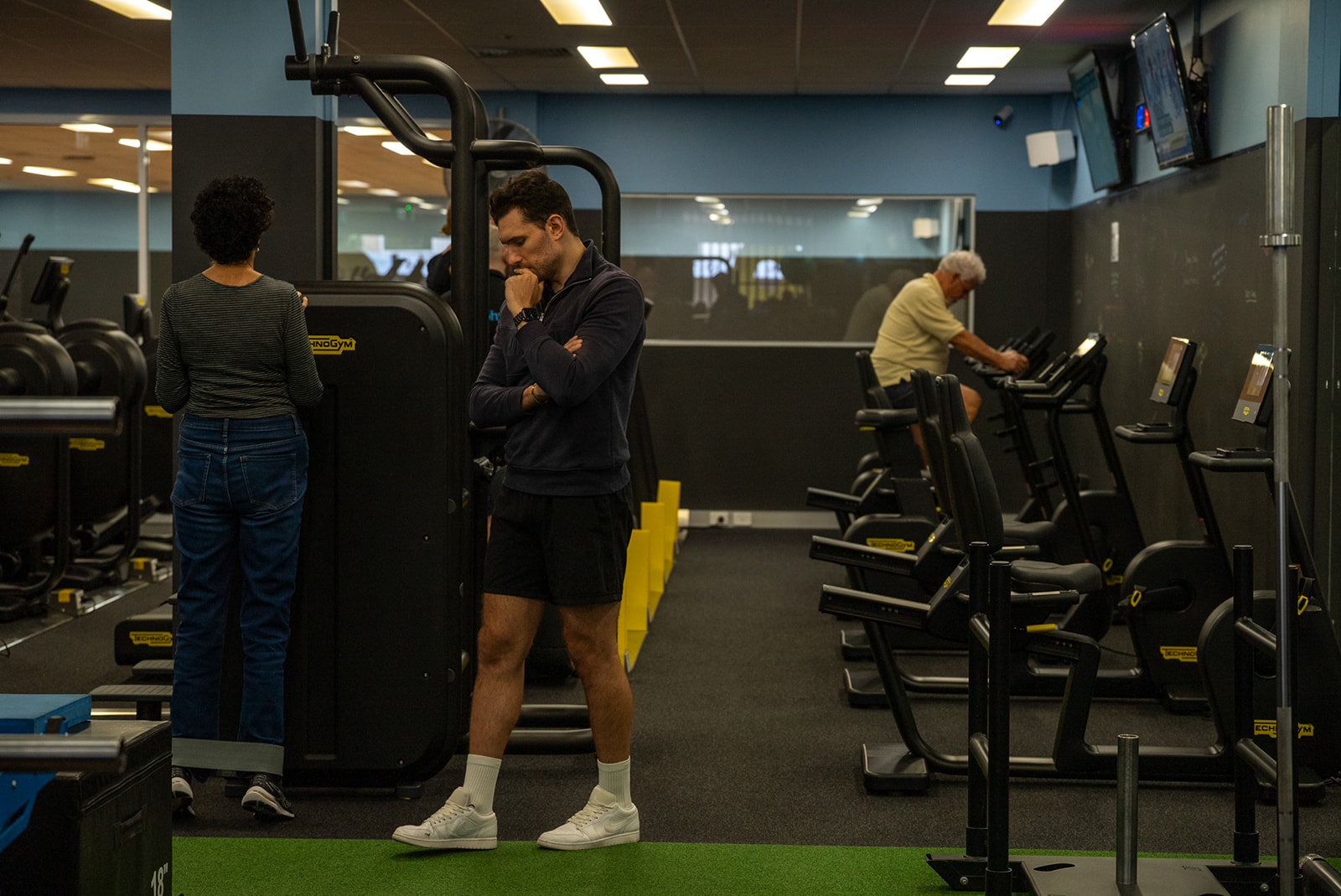
Walking into a gym for the first time is uncomfortable for everyone. Lifting weights is intimidating. Your brain is wired to protect you from the unknown — every cell will push you away. We’ve removed most of that early friction at Team8: small classes, supervised by health professionals, no judgement, no ego, no feeling self-conscious.
Most people who would benefit from strength training never start. The barrier isn’t physical capacity — it’s the friction of the first session. Unfamiliar equipment, unfamiliar movements, the worry that everyone else knows what they’re doing and you don’t.
This friction is universal. Twenty-five-year-olds feel it. Athletes feel it when they walk into a new gym. The difference is, most people over 50 have had decades to convince themselves that ‘gyms aren’t for me,’ and that conviction takes some unwinding.
The image most people have of strength training is a young man straining under a heavy bar. That’s a niche. Most strength training is moderate loads, controlled tempo, careful form — and for over-50s, the load and intensity are calibrated to your specific body and goals.
The injury rate in supervised strength training is lower than the injury rate in walking. The big variable is supervision: someone who knows what to watch for, who adjusts loads in real time, who progresses you intelligently.
The barrier isn’t the bar. It’s the first session. We make the first session easy.
Our classes top out at 8 people. Every class is led by a physiotherapist or exercise physiologist. You’re not lost in a sea of 30 strangers; you’re seen, coached, and adjusted to from the moment you walk in.
There are no mirrors lined with people watching themselves. No protein-shake-and-ego culture. Just over-50s, building real strength, alongside other people doing exactly the same thing.
The best way to break the friction is just to start. The 6-week trial is built for exactly that: a structured introduction to the gym, the team, and the kind of training that works for over-50s. By week three, the unfamiliar has become familiar. By week six, you’ve built measurable capability and have a clear picture of what you want next.
Book a free tour Free · No obligation