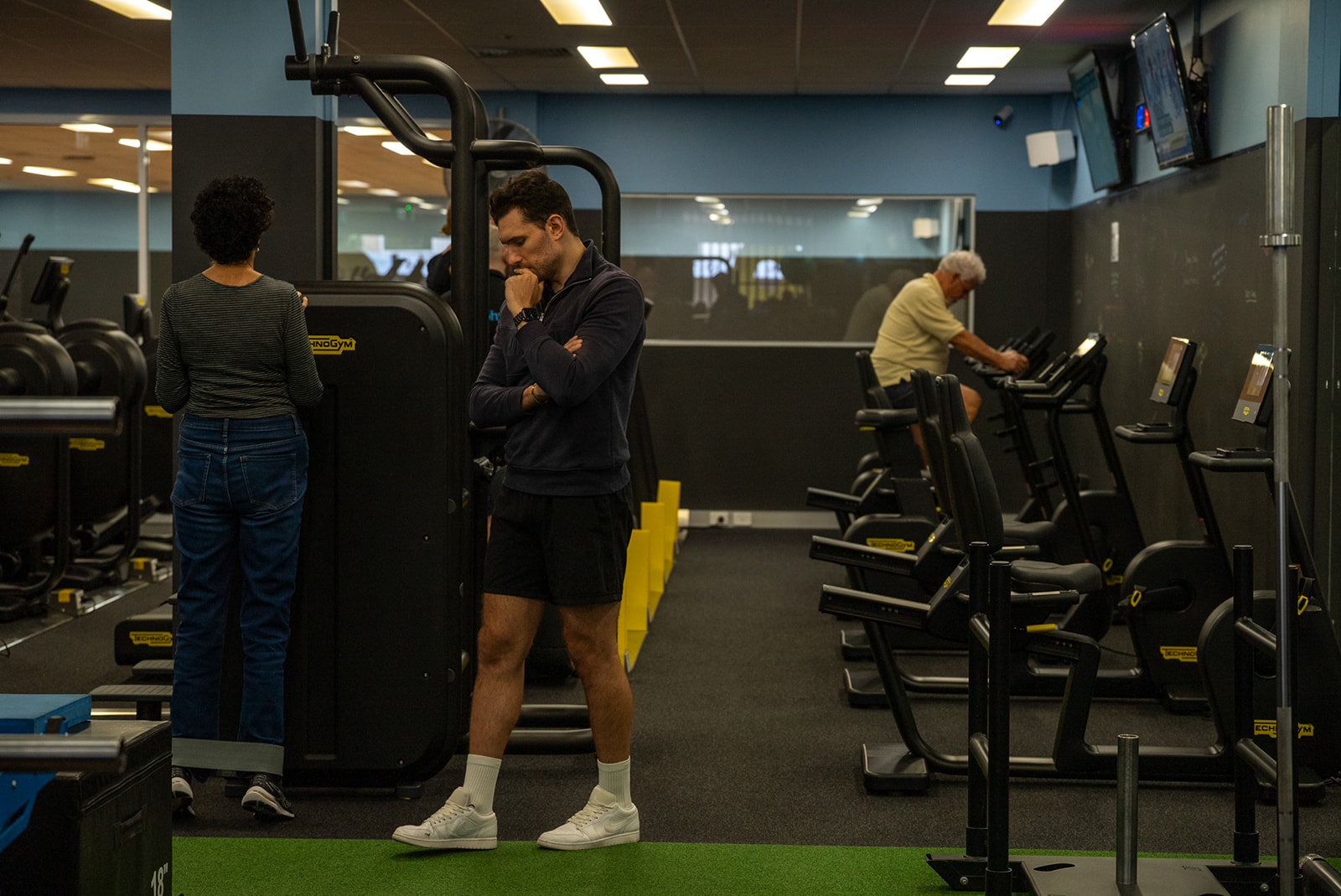
Exercise is meditation in motion. When you focus on the muscle you’re training, the breath, the range of motion — your mind arrives in the present moment with your body. The mind can travel anywhere; the body can only be in one place at a time. Strength training is one of the most reliable ways to bring them back together.
Most anxiety is the mind extrapolating into a future that hasn’t happened, or replaying a past that already has. The body is always now. Breathing now. Pressing against the floor now. Lifting now. When you make the body the focus, the mind has nowhere else to go — at least for a few minutes.
This is what meditation teachers have known for thousands of years. What strength training adds is intensity. You can’t focus on the muscle you’re training and also worry about tomorrow’s appointment. The demand of the present is too high. The mind quiets.
Sitting still and trying to ‘be present’ is one of the hardest practices in the world. The mind wanders within seconds. The body offers a much easier path: give it something physically demanding to do, and presence happens automatically.
This is why people often report feeling ‘clearer’ after a hard training session in a way they don’t after a meandering walk. The training demands attention. Attention is what they were missing.
The mind can travel anywhere. The body can only be in one place at a time.
You can deepen this effect by training with intention rather than autopilot. Notice the muscle you’re working. Feel the breath. Pay attention to the position of your spine, the contact of your feet, the tension in your hands. Each cue is an anchor.
Over time, that quality of attention becomes available outside the gym too. You start to notice the body during the day. You notice tension you can release. You notice when you’re shallow-breathing. The mind-body link, once trained, stays trained.
You don’t need to learn to meditate. You don’t need to download anything. You need two sessions a week where you commit to being inside your body while you work. The mental health benefits compound on top of every other benefit you’re already getting.
Worry doesn’t disappear with exercise. But movement gives you control over how much it affects you. Push, pull, and lift — when you put your physiology through purposeful effort, the mind follows. People walk out of strength sessions reporting less anxiety, more focus, and a measurable shift in how grounded they feel.
Resistance training triggers a cascade of measurable changes: increased BDNF (a protein that supports neuron growth), elevated mood-regulating neurotransmitters (serotonin, dopamine, noradrenaline), reduced cortisol over time, and improved sleep architecture. Each of these has independent effects on anxiety and mood.
Together, the effect is large. The most robust meta-analyses on resistance training and depression show effect sizes comparable to first-line therapy and antidepressants for mild to moderate cases. That’s not ‘a bit better than nothing.’ That’s clinically meaningful change.
Walking, cycling, swimming — all of these help. But there’s something particular about lifting heavy things. Maybe it’s the focused effort, the demand for full presence in the body. Maybe it’s the evidence of progressive capability over weeks and months. Maybe it’s just that you can’t think about your inbox when you’re under a loaded bar.
Whatever the mechanism, the people we work with consistently report that strength sessions deliver something a walk doesn’t. They arrive distracted and leave settled. They arrive heavy and leave clearer.
You can’t think your way out of a stuck mood. Sometimes you have to lift your way out.
Most general gym sessions aren’t intense enough to deliver the mental health effect. You need to actually work — meaningful loads, real exertion, full focus. That’s hard to push yourself to alone. It’s the supervision that makes it work for most people.
Our small classes are built around exactly this: enough intensity to matter, enough support to keep it safe, enough variety to keep it engaging. You leave having done something real with your body, which leaves your mind with somewhere to land.
You don’t need to feel motivated to start. You need to show up twice a week and let your body do the rest. The mood shift compounds: the better you feel after, the more you want to come back, the better you feel. Strength sessions become the part of the week you stop trying to skip.
Book a free tour Free · No obligation