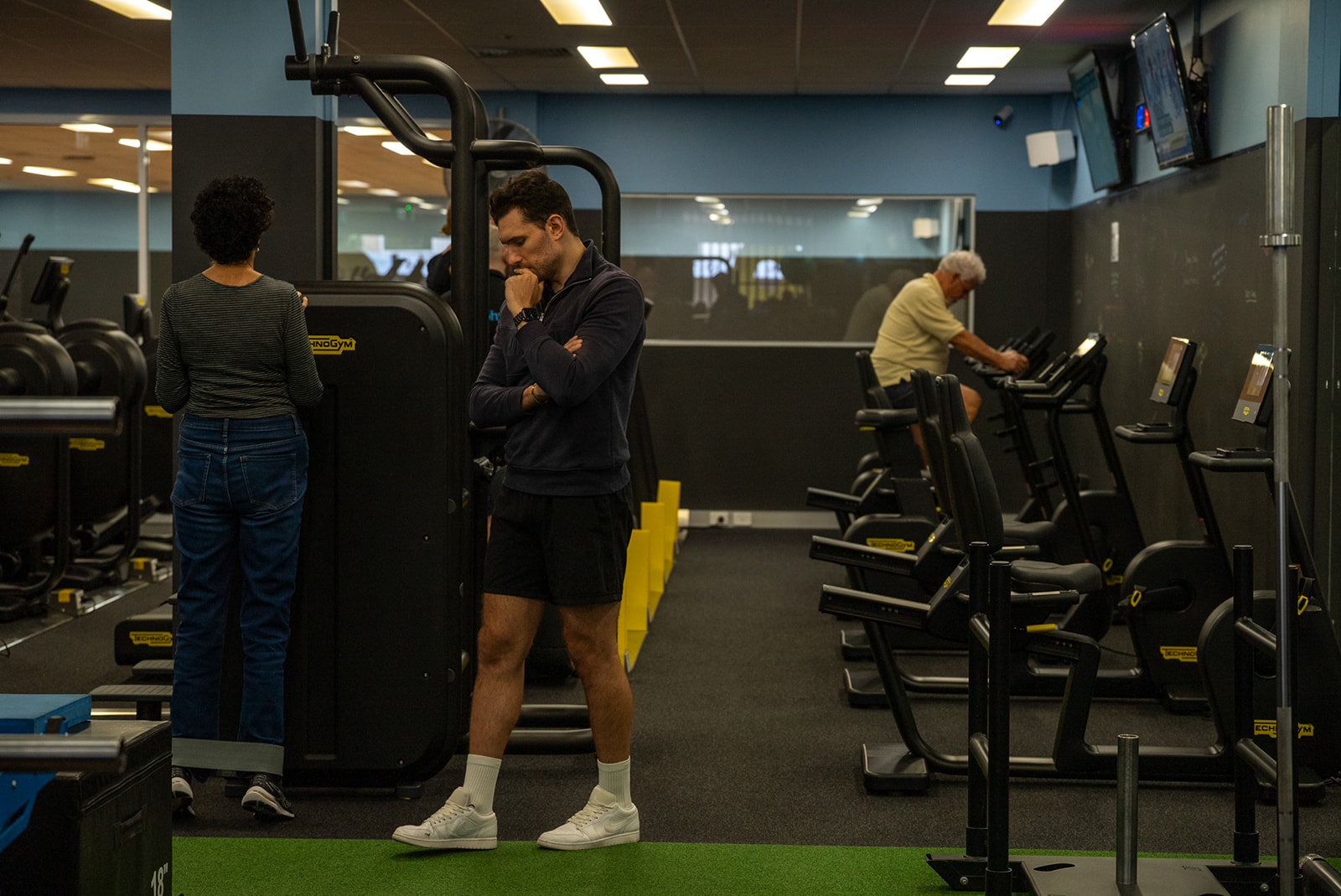
After a fall, the body usually recovers in weeks. The confidence takes longer. The brain becomes cautious — sometimes too cautious, and that itself becomes a risk factor for the next fall. Rebuilding confidence isn’t psychological alone: it’s about deliberately retraining the proprioceptive, balance, and reactive systems that keep you stable.
Most people understand that a fall can break a bone. Fewer understand the second injury that almost always follows: the loss of confidence. You start to move more carefully. You hold the rail. You decide against the bushwalk. You take fewer steps in a day. Your world quietly shrinks.
And here’s the cruel irony — the careful movement that protects you in the short term degrades the very systems you need for balance. Less walking means weaker muscles. Less varied movement means duller reflexes. Caution becomes its own risk factor.
Confidence in your body isn’t faith. It’s calibration. Your nervous system keeps a running record of what your body can and can’t do, and updates that record based on what you actually do. Stop challenging it, and the record updates downward. Challenge it appropriately, and the record updates upward.
This is why the right rehab after a fall isn’t rest. It’s progressive, varied, slightly-uncomfortable movement that gives the nervous system new evidence: yes, you can stand on uneven ground. Yes, you can recover from a wobble. Yes, you can move with momentum and not lose control.
The body recovers in weeks. The nervous system needs a deliberate retraining.
Step one: a thorough assessment to identify where balance and reactive systems are actually impaired (vs. where you’ve just become cautious). Step two: a graduated program that systematically rebuilds capacity in those specific areas. Step three — and this is the underrated one — repeated exposure to the kind of movement contexts that previously felt risky.
Walking on grass. Stepping over things. Changing direction. Reaching while standing. The point isn’t to make you do these things in your daily life with your eyes closed. It’s to make your nervous system believe, with evidence, that you can.
If you’ve had a fall or near-fall, the worst thing to do is wait it out. Confidence doesn’t return on its own. It returns through deliberate, supervised challenge to the systems that keep you upright. We’ve helped a lot of people walk back into their lives after a scare. The journey back is shorter than most people think.
Most falls aren’t about being weak. They’re about reflex speed. When you trip or lose balance, multiple muscle groups have to fire in the right sequence within a split second. As reflexes slow with age, that response fails — and falls happen. The good news: reflexes can be trained. The nervous system stays adaptable at any age.
When you catch your toe on a rug, your body has about 300 milliseconds to recover. That’s the window in which your nervous system has to detect the loss of balance, fire the right correction, and engage the right muscle groups at the right intensity. Get any of those wrong, and you’re on the floor.
In a younger nervous system, this happens automatically and almost flawlessly. As we age, the speed of signal transmission slows, the muscles fire with less power, and the brain becomes less precise about which correction to send. A trip turns into a fall.
Strength matters, but it’s not the primary risk factor in most falls. The bigger contributors are: reflex speed, proprioception (knowing where your body is in space), reactive balance, and vision. Most fall-prevention programs underweight these and overweight standing-still balance exercises.
Standing on one leg in a kitchen with a counter to grab is useful. But it’s not what protects you when a step gives way on a footpath. Real falls happen in dynamic, unpredictable contexts — and they need dynamic, reactive training.
You don’t prevent falls by training balance. You prevent falls by training reactions.
Reactive balance training: deliberately small perturbations (a gentle nudge, a wobble cushion, a sudden direction change) that force the nervous system to respond fast. The brain learns to fire the right correction quicker. Over weeks, the time between perception and response measurably shortens.
Strength still matters — particularly in the hips and the calves, which provide the corrections — but it’s the speed of the response that determines whether you stay upright or end up in A&E. This is why our balance classes look different. They look chaotic. That’s the point.
If you’ve fallen in the past year, or you’ve started to feel less confident on uneven ground, that’s a signal worth acting on. A professional assessment can identify exactly where your reactive balance is breaking down, and the right training program will produce measurable improvements within weeks. Falls are preventable. Most of the time, they’re trainable away.
Book a free tour Free · No obligation