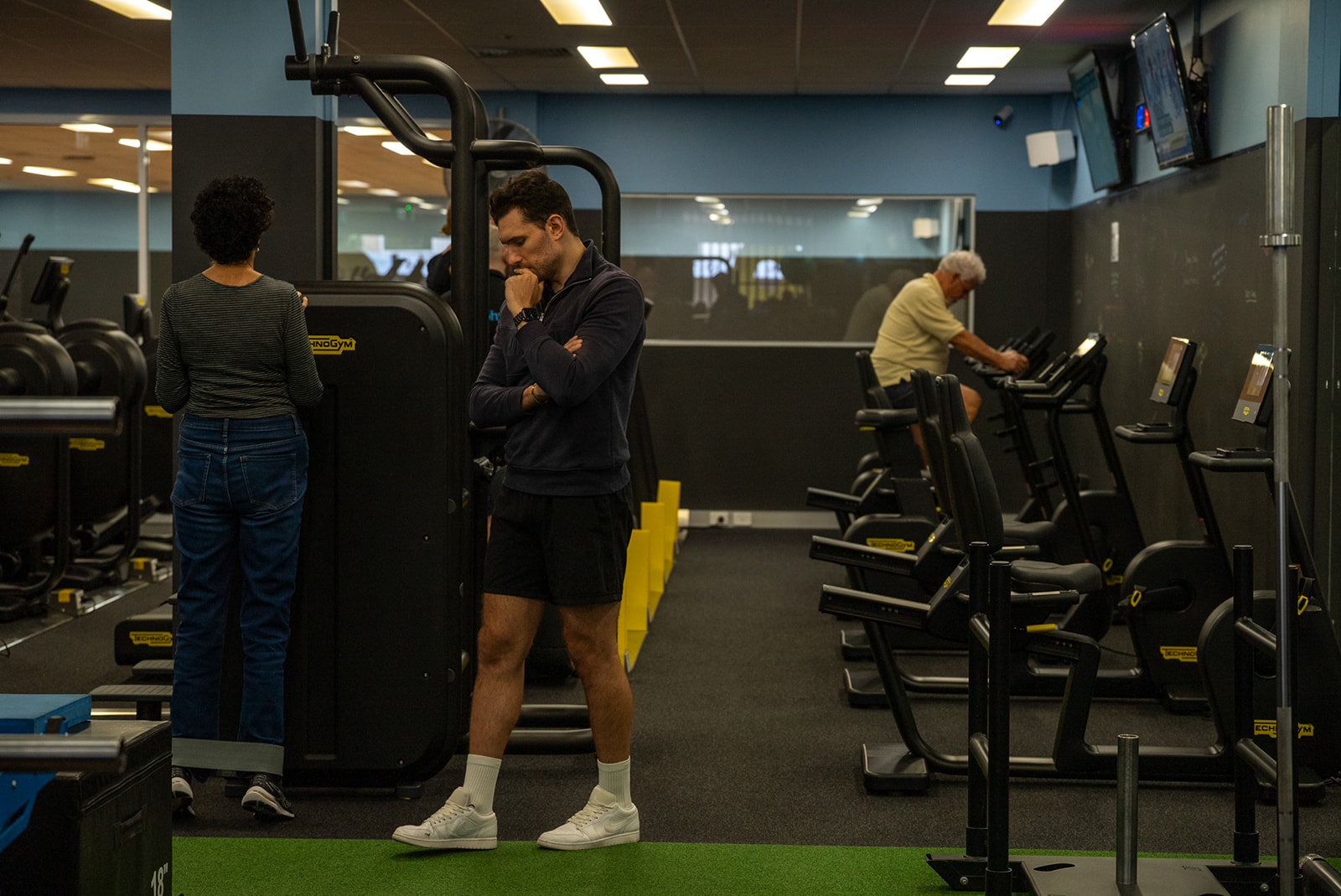
Most falls aren’t about being weak. They’re about reflex speed. When you trip or lose balance, multiple muscle groups have to fire in the right sequence within a split second. As reflexes slow with age, that response fails — and falls happen. The good news: reflexes can be trained. The nervous system stays adaptable at any age.
When you catch your toe on a rug, your body has about 300 milliseconds to recover. That’s the window in which your nervous system has to detect the loss of balance, fire the right correction, and engage the right muscle groups at the right intensity. Get any of those wrong, and you’re on the floor.
In a younger nervous system, this happens automatically and almost flawlessly. As we age, the speed of signal transmission slows, the muscles fire with less power, and the brain becomes less precise about which correction to send. A trip turns into a fall.
Strength matters, but it’s not the primary risk factor in most falls. The bigger contributors are: reflex speed, proprioception (knowing where your body is in space), reactive balance, and vision. Most fall-prevention programs underweight these and overweight standing-still balance exercises.
Standing on one leg in a kitchen with a counter to grab is useful. But it’s not what protects you when a step gives way on a footpath. Real falls happen in dynamic, unpredictable contexts — and they need dynamic, reactive training.
You don’t prevent falls by training balance. You prevent falls by training reactions.
Reactive balance training: deliberately small perturbations (a gentle nudge, a wobble cushion, a sudden direction change) that force the nervous system to respond fast. The brain learns to fire the right correction quicker. Over weeks, the time between perception and response measurably shortens.
Strength still matters — particularly in the hips and the calves, which provide the corrections — but it’s the speed of the response that determines whether you stay upright or end up in A&E. This is why our balance classes look different. They look chaotic. That’s the point.
If you’ve fallen in the past year, or you’ve started to feel less confident on uneven ground, that’s a signal worth acting on. A professional assessment can identify exactly where your reactive balance is breaking down, and the right training program will produce measurable improvements within weeks. Falls are preventable. Most of the time, they’re trainable away.
Your body adapts to its environment. The less physically demanding your life is, the less your body needs to maintain. Stairs start to feel hard — so you take the lift. You move a little less, your body does a little less. Then one day, a flight of stairs is a big task. The hard thing and the right thing are usually the same thing.
Train a muscle, it grows. Stop training it, it shrinks. Walk more, your cardiovascular system improves. Walk less, it degrades. Your body is constantly recalibrating to what you actually do. Not what you used to do. Not what you intend to do. What you do.
This sounds obvious, but its implications are uncomfortable. The lift you take to the second floor isn’t neutral — it’s a small dose of de-training. So is the parking spot you took because it was closer. So is the chair you sat in for an hour longer than you should have. None of these are dramatic. They just compound.
Every modern convenience is a trade. We trade physical demand for time and comfort. Mostly that’s fine. But over years, the cumulative cost of choosing easy is enormous: less muscle, less mobility, less cardiovascular capacity, less reactive balance.
And the cost is invisible until it isn’t. The body absorbs it silently for years. Then one day stairs feel like an event, getting up from the floor is a project, and a long walk requires recovery.
The hard thing and the right thing are usually the same thing.
The flip side: deliberately taking the harder option keeps the body capable. Stairs instead of the lift. Walking to the shops instead of driving. Standing instead of sitting. Carrying things instead of using a trolley. Each one is a tiny dose of training that maintains the underlying system.
It’s not about punishing yourself. It’s about understanding that the body needs work to stay capable, and choosing — daily — to give it some.
Book a free tour Free · No obligation